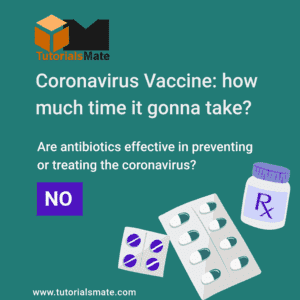
Coronavirus Vaccine: How soon we can expect?

Coronavirus Vaccine: How soon we can expect?
The disease, COVID-19, caused by the new coronaviruses is new and there is no proper evidence that can explain how it actually behaves and spreads. The disease is spreading very fast around the world, but there are no vaccines that can be used to stop it. So, people are continually looking to know how far are we from getting these life-saving medicines.

How much time it can take to have coronavirus vaccines?

More than 35 organizations and academic institutions are working at breakneck speed to create such a vaccine. The human trial of a vaccine has also started to test the effectiveness against pandemic coronavirus. On March 16, 2020, Government Health Officials announced that the trial for coronavirus has begun and a healthy volunteer from Seattle will be the first person in the U.S. to receive a dose of a new vaccine as a part of clinical testing and trial.


The name of a person to receive the jab of coronavirus vaccine is Jennifer Haller. Jennifer Haller is a 43-year-old woman and mother of two children.

The experts say that it will still take several months to get into the conclusion. However, scientists around the world are tracking research to know if this vaccine, or others also in research, will work.

Note: There are already four types of coronaviruses found in human beings which cause the common cold. Currently, there is no vaccine for any of them.

Vaccines need several tests

According to the reports, most of the vaccine we are using almost took five to fifteen years to be perfect. So, a vaccine may take an entire year, no matter how fast researchers or scientists work. Because vaccines must be rigorously tested to ensure that they will not cause other dangerous side-effects. For that, the vaccines must pass through three iterative phases of clinical trials.

The trial and testing methodology generally consists of three following phases:

1) Testing is conducted on a small number of people (typically between 20 to 80 individuals).

2) Testing is conducted on a larger number of people. It can involve 100 to 200 individuals with different characteristics, such as age and physical health, etc. These include a group of those people who the vaccine is being developed for.

3) Testing is conducted on a huge number of people typically 300 to 3,000. It is conducted to demonstrate that a given vaccine provides the expected medical effects it's intended to.

If the vaccine passes these tests, then only it could be approved for widespread use.

But even if scientists develop a vaccine, there is still a big job ahead to produce vaccines in bulk. Therefore, realistically, the vaccine for coronavirus will not be ready until at least the middle of the next year. In the meantime, researchers and scientists will continue to develop alternative medicines or vaccines to combat the spread of COVID-19.


Will there be side effects of the coronavirus vaccine?

All medicines, including common pain-killers, can be harmful if not taken with care. It is always suggested to take any medicine as prescribed by the physician. However, Researchers are monitoring the development of coronavirus vaccine to prevent any unexpected harm. It is very difficult to know what can be the side effects of an experimental vaccine without the proper clinical trial.

Aren’t drugs effective against coronavirus?

Doctors are already trying different anti-viral drugs to test if they can be beneficial against coronavirus. It was expected that a pair of HIV drugs (ritonavir and lopinavir) may be effective against coronavirus; however, the result was disappointing. Instead, trials are still on in many countries, including the US. 

Conclusion

It is recommended to maintain good hygiene, clean your hands frequently and do not touch your face. Contact your doctor if you notice symptoms of COVID-19. These are the best ways until a vaccine or treatment is ready.

Read Article

CoronaVirus: What is, Symptoms, Causes, Treatment

Recently, a disease Coronavirus (named as COVID-19) is spreading. It was first started in China from the seafood and meat market in Wuhan. It has infected people in almost more than 70 locations internationally, including the United States. There were positive cases in New York, California, Washington State, and Oregon. The disease has taken over 3,00,000 lives globally and infected more than 63,00,000 people internationally (data updated on June 1, 2020). The WHO (World Health Organization) has declared the COVID-19 as a pandemic.

What is coronavirus?

The coronavirus is a family of viruses that is typically found in animals. It is transmitted from animals to humans and then it spreads from one person to another. This virus can cause a range of illnesses in humans which includes common cold, flu, headache, and more critical forms like MERS virus and SARS virus.

In 1960, the researchers first found the first evidence of human coronavirus (HCoV). It was found in the noses of the people suffering from a normal cold. The name ‘coronavirus’ was discovered from the crown-like projections on their surfaces. The term ’Corona’ in Latin is referred to as ‘halo’ or ‘crown’.

What is COVID-19?

The CDC (Centers for Disease Control and Prevention) started monitoring the outbreak of a new coronavirus, SARS-Cov-2. It was said to be a reason for respiratory illness and named COVID-19.

What caused a coronavirus infection?

The first person infected with COVID-19 had links to an animal and seafood market. Researchers found a conclusion that animals initially transferred the virus to humans. However, more reports were found later where there were infected people with no connection with or exposure to the market. That leads to the result that the virus is spreading from one person to another. It spreads through contact with bodily fluids, can be droplets in a cough. Some reports say that this can also be transmitted to another person if he/she has touched something which an infected person has touched earlier and then touching the mouth, nose, or eyes with his/her hand.

Who can be infected?

According to the WHO reports, this virus can cause a critical impact on older adults (over 60 years old), and individuals suffering from other diseases that compromise their immune system. The other groups include young children and women who are pregnant. However, CDC reports that there are mild systems noticed in children.

What are the symptoms of a coronavirus?

The symptoms for COVID-19 can be mild to severe and it may vary from person-to-person. It can take 2-14 days to notice symptoms after exposure. Some of the common symptoms of this disease are:


• Fever (According to CDC report, at least 100.4 Fahrenheit) 
• Cough
• Breathlessness
• Potential loss of taste or smell
• Runny Nose
• Sneezing
• Sore throat
• Fatigue

People with weak immune systems may notice critical symptoms, such as pneumonia or bronchitis. 

Can a coronavirus be stopped?

Prevention is better than cure.

It is always suggested to take precautions. The best way to stop or slow down this disease is to be well informed about it, like how it spreads and what are the symptoms, etc. Protect yourself and others by following the given rules:

• Avoid close contact or meeting in groups. Stay at home as much as possible.

• Do not cough into your hands, try to cough with a tissue or use your upper sleeve or elbow.

• Wash your hands frequently with soap and water for at least 1 minute. It is very important to clean your hands before eating, after blowing your nose, coughing, or sneezing. 

• Avoid touching your mouth, nose, or eyes.

• Drink enough water.

• Avoid smoking and smoky areas.

Is coronavirus treatment available?

At this time, there is no cure or treatment available for COVID-19. However, there are many cases where doctors have treated infected people successfully.
There are several ongoing clinical testing and trials for finding the proper cure for this disease. WHO suggests you contact your doctor if you feel symptoms of COVID-19.

Note: CDC does not recommend you to wear a mask if you do not have COVID-19. The mask is suggested to the people infected with COVID-19 so that they prevent spreading the virus to others.

How has it affected the economy?

Most countries have locked down the areas or cities to prevent the spreading of COVID-19. Companies are allowing their employees to work for home. Apart from it, companies are conducting online interviews to hire employees.
Check out our recommendation if you have an online interview: Click here.
Every business from IT to Tourism is struggling due to COVID-19 which has drastically affected the economy of every country.

Read Article

Coronavirus: Hand Sanitizer vs Hand Wash

Hand Sanitizer or Hand Wash: Which is more effective against Coronavirus?
In the time of coronavirus, it is very important to keep your hands germ-free to prevent the spread of COVID-19.

However, people are getting confused between hand sanitizer and hand wash by soap or water. In most countries that are fighting against coronavirus, there is either no stock for hand sanitizers or available in outrageously inflated price and that too in a limited quantity. Even, it is very difficult to get it from e-commerce sites due to no stock availability. 

But the question is- 
“Is hand sanitizer more effective than washing hands with soap and water to prevent the spread of coronavirus?”


In this article, we have discussed the effectiveness, appropriate usage, and the right selection of hand cleaning products that will give you protection against COVID-19.

Why is it important to clean hands to prevent the spread of coronavirus?

The thing is that a disease COVID-19 caused by coronaviruses is a new illness. There is no proper specification or documentation available for how exactly it spreads. However, evidence suggests that the novel coronavirus is generally transmitted through cough droplets and spread from person to person. The droplets can land on anything, from any object to surfaces to foods. It can live for hours or days depending on the conditions. 

If people touch anything on which those droplets have landed before, and then touch their face, nose or eyes, they can get infected with this virus. So, it is very important to clean your hands when you return to your safe place (e.g., your home, your work station, or your desk, etc.).

How do soap and water work against viruses?

Under the microscope, coronaviruses seem to be surrounded by pointy spires, which appear as a crown (corona). These crowns are further surrounded by the layer made of lipids (in general ‘fat’). If that outer layer is removed, the viruses get physically deactivated.

It is possible to break the particles with soap. Soap can be a good option to dissolve the lipid layer surrounding the viruses. It also breaks up the other weak bonds within the virus. As a result, the virus effectively falls apart. Soap includes fat-like compounds known as amphiphiles, which are almost similar to the lipids that are found in the virus membrane.

Therefore, the soap comes into contact with these lipids and creates a solid bond with them, which forces them to disconnect from the virus. It further forces the virus to disengage from the surface of the hands.


How does a hand sanitizer work against viruses?

Hand sanitizer can be beneficial against coronavirus if used properly. Alcohol in a hand sanitizer is a kind of a different chemical property. It can break the germ membranes if it gets into direct contact with the bacteria or virus. Alcohol can be pretty good at killing germs, but it does not wash them away.

Which is more effective?

Experts recommend people to wash hands with soap and water. It is considered as a gold standard for preventing infectious diseases (such as flu and diarrheal diseases), and other harbor nasty pathogens, including the coronavirus. The new coronavirus comes encased in a layer of fat (or you can say a lipid envelope), which soap can break apart. It will reduce the chances to be infected. Besides, people can also use liquid soap in place of bar soap. Since bar soap and liquid soap both are equally effective, but, it is suggested not to use bar soap which is available in public places (such as public washrooms).

The hand sanitizers are suggested only in those situations where people cannot wash their hands with soap and water. Make sure to use only those hand sanitizers which contain at least 60% alcohol because it’s the alcohol that’s required to kill viruses.

Note: Hand sanitizer or hand wash is of no use if not used properly.

How to clean hands?

The CDC (Centers for Disease Control and Prevention) suggests people to use clean running water of any temperature to wet the hands before applying the soap.  So, wet your hands with water, lather them with soap and scrub for at least 20 seconds. Scrubbing with your hands is important to generate soap bubbles, which dissolve the chemical bonds that allow bacteria, viruses and other types of germs to stick to the hand surfaces. Make sure to focus on places, such as the back of your hands, between fingers, and under the nails, because there are the places where microbes tend to build up. Rinse them thoroughly with clean running water. Rinsing your hands washes away all the germs that have been killed by soap molecules. Dry your hands well with a disposable towel, and use that towel to turn off the tap before throwing it away. 


According to reports, ‘Paper towels are superior to air dryers’. It is because these towels can dry your hands more quickly and thoroughly when compared with air dryers and germs can easily be transferred to and from wet hands than dry.

Summary

• Since using hand sanitizer can be a smart way to slow or prevent the spread of viruses, it is still recommended to wash your hands thoroughly with soap and water. 
• Wash your hands frequently for at least 20 seconds. 
• If you are bounded to use hand sanitizer, then make sure that your sanitizer contains at least 60% of alcohol. 
• Make your hands dry before you apply hand sanitizer. Cover every surface of both hands thoroughly with the sanitizer and rub it gently until dry.
• Do not apply sanitizer in your hands if they are greasy or dirty. In such cases, sanitizers are less effective.

Read Article

Coronavirus: Frequently Asked Questions (FAQ)

Frequently Asked Questions (FAQ) on Coronavirus: Everything Explained
Coronavirus is currently a serious concern for the entire humankind. World Health Organization has already declared it a pandemic. WHO also suggests people to take proper precautions and follow recommended guidelines against coronavirus to reduce exposure and transmission. However, many people are still confused about coronavirus, its symptoms and how it spreads, etc. 


Here, we have covered the frequently asked questions on coronavirus that will surely help people to get a better understanding of this disease. Let’s get started with the basics:


1) What is Coronavirus?

Coronavirus is described as a large group of different viruses that may cause illness in animals or humans. It can cause respiratory infections in humans that might be just a common cold to severe diseases like Middle East Respiratory Syndrome (also referred to as MERS) and Severe Acute Respiratory Syndrome (also referred to as SARS). 

2) What is COVID-19?

The most recent coronavirus is causing a disease named as COVID-19. The most recent virus and disease were initially found in the outbreak began in Wuhan, China, in December 2019.

3) What are the known symptoms of COVID-19?

The most common and known symptoms of COVID-19 are fever, dry cough, tiredness, runny nose, nasal congestion, sore throat, aches, and pains, etc. The symptoms vary from person to person. According to the records, there were some infected COVID-19 people without any of these symptoms. And, around 80% of people recover from this disease without any special treatment.
Generally, 1 out of 6 people who get infected with it becomes seriously ill. There can be a critical situation and difficulty in breathing.

4) How does COVID-19 spread?

COVID-19 can spread in people from others who have the virus. It can be transmitted through small droplets from the nose or mouth while the infected person is coughing or sneezing. These droplets usually land on surfaces, objects or directly on the person. By touching such objects and surfaces, then further touching eyes, nose or mouth, a person can catch COVID-19. People can also be get infected with it if they breathe in droplets from a person with COVID-19 who coughs out or exhales droplets. Apart from it, WHO is still researching the ways that can spread COVID-19.


Some popular SDLC methodologies are as follows:

5) Can COVID-19 be transmitted through the air?

According to the reports, it is said that the virus that causes COVID-19 is usually transmitted through contact with respiratory droplets rather than the air. However, research is still on to make this point clear. It is suggested to maintain a distance (around 1 meter or 3 feet) from a person who is sick.

6) How can I protect myself and prevent the spread of COVID-19?

You can protect yourself by taking the precautions given below:
• Wash your hands frequently with soap or alcohol-based sanitizer because it kills viruses that may be present on your hands.
• Maintain a distance, at least 1 meter, from a person who is coughing or sneezing.
• Avoid touching your face, nose, eyes or mouth because these are the main source that can get you affected with this disease.
• Stay at home and self-isolate yourself even if you have mild symptoms such as headache, low-fever, slight cough, etc until you recover.
• If you feel unwell or you have a fever, cough, difficulty in breathing, call your doctor or nearest medical center in advance. This will protect you as well as stop the spread of the virus. Also, wear a mask.

7) How likely am I to catch COVID-19?

It actually depends on where you live. If there are positive cases of COVID-19 in your area, then you may unlikely to catch this disease. So, it is better to stay at home and avoid any travel or large gatherings. Be aware of the situation where you are currently living or where you are planning to go. Following the precaution efforts will surely help you to reduce the risk of catching COVID-19.

8) Who is at risk of getting severe illness?

There are still many trials and testing out there finding the results on how actually COVID-19 is affecting people. As per the existing reports, it can cause severe illness to older people and people with other medical conditions such as high blood pressure, heart disease, lung disease, diabetes, or cancer. 

9) Can we use antibiotics to prevent or treat COVID-19?

No, you should not use Antibiotics to prevent or treat COVID-19 as Antibiotics are only helpful in bacterial infections. They cannot be used against a disease that is caused by a virus. They should only be taken as directed by the physician in case there is a requirement to treat bacterial infection.


10) Is there any vaccine, drug or treatment to stop COVID-19?

As of now, there is no vaccine and no specific treatment to treat COVID-19. People should consult with a doctor as soon as they notice any symptoms of COVID-19. Therefore, they can receive care to relieve symptoms.

11) How much time it will take to make a COVID-19 vaccine?

There are several trails running by different countries. Possible vaccines and drug treatments are under testing. They are being tested through clinical trials. WHO is also working with different medical authorities to develop vaccines and medicines to treat COVID-19.

12) Can a mask protect me from COVID-19?

It is recommended to wear a mask only if you are ill with COVID-19 or looking after someone who may have COVID-19. There is no requirement of masks in other scenarios. 

13) What is the incubation period and how long it can be?

The ‘incubation period’ is the time between catching the virus and starting to have the symptoms of the disease. The incubation period for COVID-19 can be 1-14 days. In most cases, the symptoms start in five days.

14) Can I get infected with COVID-19 from an animal source?

Coronaviruses are usually found in animals. However, people get infected with these viruses which may have spread to other people. There are no possible animal sources of COVID-19 yet.


It is recommended to avoid direct contact with the animals and surfaces that are in contact with animals. Avoid consuming raw or uncooked animal products to ensure safety.

15) Can I get infected with COVID-19 from my pet?

There is currently no evidence that a pet can transmit COVID-19.

16) How long does the COVID-19 virus survive on surfaces?

There are no proper reports to calculate the surviving time of the COVID-19 virus. However, based on studies on other coronaviruses, it is assumed that it may persist on surfaces for a few hours or up to several days. This actually varies according to the different conditions such as type of surface, the temperature of the atmosphere, etc.

17) Is it safe to make use of e-commerce sites or online food sites to receive a package?

Yes, there is a low risk of catching a virus that causes COVID-19 through a package that has been moved, traveled, and exposed. However, it is suggested to get your package delivered to the door on a clean surface or table and not to touch it at least for a day.

18) Is there any way to confirm whether someone has COVID-19?

The only effective way to confirm it is to get tested and have that test be positive.

19) Should I go to a doctor if I have a fever or a cough?

It is suggested to stay at home at least for seven days if you notice a fever or cough. Make a distance from other people or family members until you recover. If you get worse or symptoms last longer than seven days, you should call in a helpline number according to your country or city.

20) What are the other things that I should avoid?

Avoid smoking, wearing multiple masks, and taking antibiotics because these are all not effective against COVID-19. It can be harmful.

These questions and answers will be updated as more is known about COVID-19, so, keep checking this page for more questions.

To get instant answers, you can ask your questions via the Contact form or type ‘hi’ and send it to +41794123236 on WhatsApp. The WHO will answer your questions on WhatsApp.

Read Article

COVID-19 Full Form: What does it stand for?

COVID -19: CoronaVirus Disease -19


What is the full form of COVID -19?

The meaning or full form of COVID-19 is "CoronaVirus Disease -19".

COVID-19 Full Form


Read Article

Online Interview Questions And Tips For 2025-26

Nowadays, many companies are conducting online interviews over Skype, Google Hangouts, and other video chat platforms. It is because online interviews can drastically save the employer’s money and other resources.


These interviews are really efficient for both the employee and the employer. In this article, we have shared the online interview questions that an employer may ask in any online interview or an in-person interview. In addition, we have also covered some tips for the preparation of online interviews. Most of the companies have started taking online job interviews after the CoronaVirus. So, you can prepare and appear for the interview from the comfort of your home.


Online Interview Questions and Tips

Online Interview Questions

Let’s first start with the questions because if you are ready, then it will ensure that your online interview goes well. The key to getting success in any interview is confidence and being comfortable. This is why preparation and practice play an important role to boost your confidence. So, prepare for an online video interview with the following interview questions:


What You Will Learn


1) Describe yourself in short.

This is a basic question that creates your first impression. This question is enough to judge most of your skills. This can set a platform for further questions. To answer this question, be concise and focus on your basic details. Cover important things in short and target your answer to the specific job opportunity.


2) Why do you think that this job is right for you?

This is where your research will be beneficial. You should do research about the corresponding company before appearing in an interview. You should have all the important information about the job and the company. Focus on your skills and experience and tell how you can be beneficial for the company’s growth. Market yourself with unique qualities, something that will differentiate you from others.


3) Mention your biggest achievement of life.

A human’s life is full of achievements. Do some research and find your work-related achievements to discuss. You can also mention your work experience considering it as a personal goal.


4) How do you motivate yourself?

Self-motivation is a critical factor in every job. Employers always expect to find a candidate who can motivate himself and other team members in any tough situation. So, shortlist your skills and achievements and tell them with confidence and energy. Show your employer what helps you to believe in yourself.


5) Why do you want to leave your current job?

This is one of the most important questions and can be a danger if you do not answer this question carefully. To answer this question, do not ever try to say anything negative about the company or manager. Better target your goals and focus on the future. Show the employer that you are looking for a job that can match with your goals and position, highlighting the position for which you are giving an interview.


6) Have you applied anywhere else for a job?

Interviewers may ask this question to measure your interest in their job opportunities. Or they may check if the other jobs you have applied for really match with your goals and position to cross-check your previous answers.


7) You want to ask anything?

It is always critical to have questions ready to ask an interviewer. Better prepare your questions before appearing in an interview. Avoid asking such types of questions that you can easily search through the internet or job posting.


Online Interview Tips

• Choose a private, secluded, and well-lit place with no interruptions. Put your phone in silent mode.
• Check your computer hardware to make sure that audio, video, mic, etc. are working properly.
• Dress professionally and avoid bright colors.
• Put a notepad, pen, and copy of your resume on your desk. Also, keep a glass or bottle of water near you.
• Listen carefully, don’t interrupt the interviewer. Also, nod and smile while listening.
• Write a thank you note after the interview and take follow up on progress.

Wrap Up

Online interviewing is a normal part of the hiring process. If you have one to come, it is better to follow all the instructions shared by us in this article.


Read Article